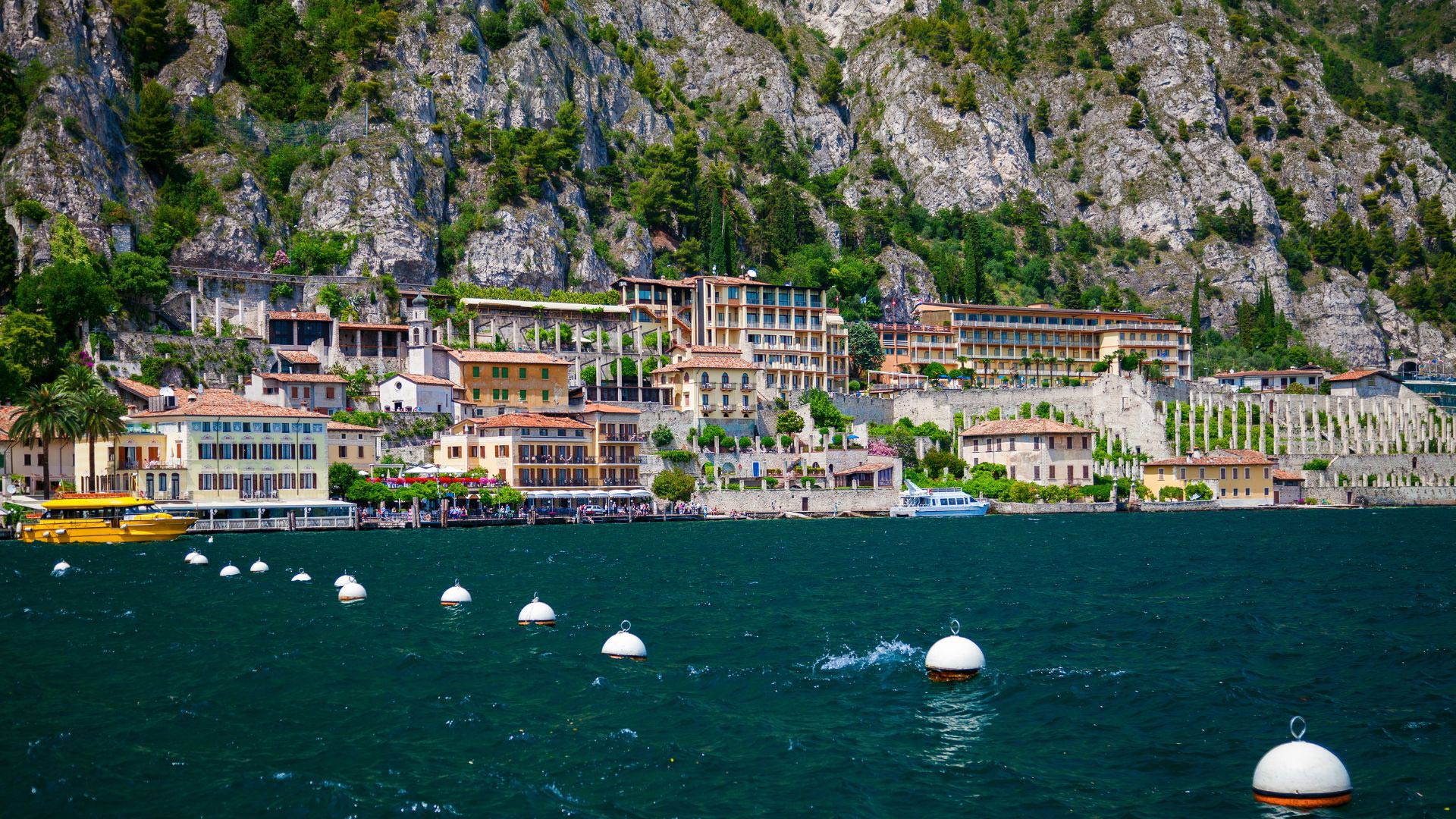
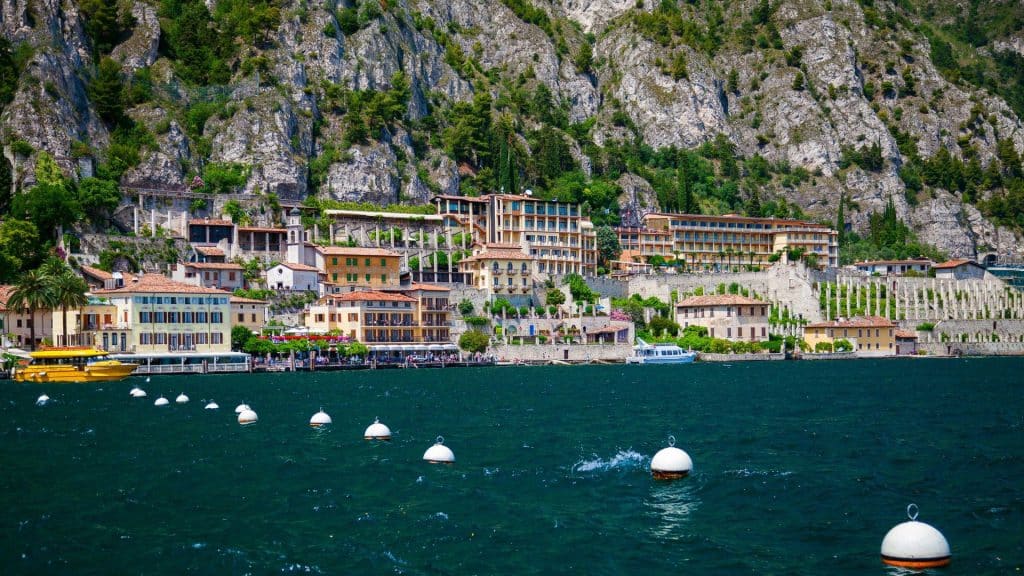
Until a few decades ago, in this corner of the Brescia shore squeezed between the lake and the steep mountain walls, lemons were grown further north than almost anywhere else in Europe. Limone sul Garda owes its charm to this very botanical paradox: a climate so mild that, as early as the 18th century, it allowed citrus fruit to be cultivated in terraced gardens sheltered from the wind and warmed by large glass panels. The lemon houses (limonaie), which over the centuries became the symbol of the town, are still one of the most recognizable sights on Lake Garda.
In this guide we tell the story of the limonaie of Limone sul Garda, how they worked, where you can still see them today, and what to discover while strolling through the old town and along the lakefront. Ready to go?
In this article: the village of Limone sul Garda · the history of the limonaie · how a limonaia worked · the Limonaia del Castèl, the only one left intact · the old town and the lakefront · when to visit · frequently asked questions.
Limone sul Garda, a village squeezed between lake and mountains
Limone sul Garda occupies a very narrow strip of land between the lakeshore and the rock walls that rise almost vertically towards the mountains: for centuries the town could only be reached by water or along steep mountain paths, an isolation that kept its historic core intact, made up of narrow houses, climbing alleys and stairways overlooking the water.
Today the village is easily reached by the Gardesana road, but that former isolation is still written in its architecture: a nativity scene of pastel-colored houses set between the blue of the lake and the green of the mountain, which now stretches along a wide pedestrian lakefront.
The limonaie: a story of out-of-season citrus
Growing citrus fruit on Lake Garda has ancient roots, but it was between the 17th and 19th centuries that the area between Limone, Gargnano and Tremosine became one of the most important lemon-producing hubs in Europe, thanks to a climate made particularly mild by the lake’s heat-regulating effect. To protect the plants from winters that were still too cold for citrus, local growers devised an ingenious system: the limonaie, large terraced structures made of tall stone pillars that supported a seasonal wooden and glass roof.
The result was a sort of greenhouse before its time, able to shield the plants from frost and make it possible, almost uniquely in Europe, to grow lemons and citrons at such a northern latitude. The fruit was then shipped across the lake to Verona and beyond the Alps, bringing prosperity to an area otherwise poor in farmland.
The decline came between the late 19th and early 20th centuries, due to a series of exceptionally harsh winters, competition from Sicilian citrus (cheaper to transport once the new railway lines opened) and a few epidemics that hit the plantations. Of the dozens of limonaie once active in the area, only a few remain today, mostly reduced to ruins of stone pillars visible along the shore.
How a limonaia worked
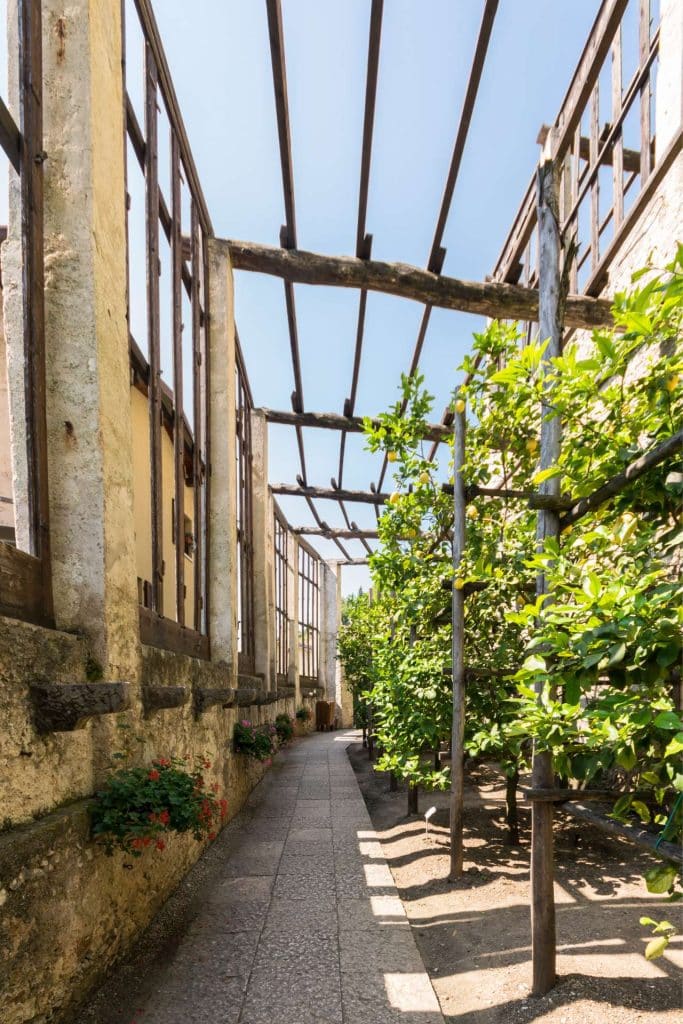
A limonaia was laid out on terraces sloping down towards the lake, each one supported by tall stone pillars (the so-called “posine”) arranged in regular rows. Between October and April, when the risk of frost was highest, farmers closed each terrace with masonry side walls and a removable wooden roof topped with glass or transparent panels: a true seasonal greenhouse, taken down in spring so the plants could receive direct sun and air during the warmer months.
Inside, small wood or coal stoves helped keep the temperature high enough on the coldest nights. The work was entirely manual and required many hands: assembling and dismantling the structures every year, tending the plants, picking the fruit by hand. A system as effective as it was expensive, which is also one of the reasons for its gradual abandonment when running costs exceeded revenues.
The Limonaia del Castèl, the only one left intact
Among the dozens of historic limonaie that once dotted the coast, the Limonaia del Castèl is today the only one still preserved in its complete structure, complete with its rebuilt roof. It stands in the upper part of the town and was bought in 1995 by the Municipal Administration, which oversaw its restoration and reopening to the public: about a hundred citrus trees are currently grown here.
Inside, you literally walk among rows of plants, getting a close look at the original stone pillars, the ventilation systems and the seasonal roof rebuilt using the techniques of the time. It is the most direct way to understand, beyond the stories, how much work and ingenuity lay behind every single lemon picked on these terraces.
The old town and the lakefront
Coming down from the Limonaia del Castèl, it is worth wandering without hurry through Limone’s old town: narrow alleys, tall colorful houses, small shops and glimpses that suddenly open onto the lake. The old harbor, with boats moored right beneath the houses, remains one of the most photographed corners of the town.
The lakefront, pedestrian for most of its length, links the old town to the piers and beaches, with the outline of Monte Baldo closing the horizon on the opposite shore. For those who love walking at altitude, Limone is also a gateway to the trails climbing towards Monte Tremalzo and the plateaus above the lake: you will find some of these routes in our guide to trekking on Lake Garda.
What’s on at Lake Garda this weekend?
Every week we send you a selection of events, places to discover, experiences, aperitifs, walks and practical tips to help you make the most of Lake Garda.
By subscribing you receive

Selected events and appointments

Ideas for weekends, trips and holidays

Villages, beaches and places to discover

Seasonal tips for experiencing Garda
When to visit Limone sul Garda
Limone can be enjoyed all year round. Spring and autumn offer a quieter atmosphere, ideal for enjoying the village and the Limonaia del Castèl without the crowds; summer is the season of long days spent between lake and walks, with the lakefront bustling with life; winter, finally, is the period most faithful to the original spirit of the limonaie, when the roofs used to be put up to protect the citrus trees from the cold.
For the opening hours of the Limonaia del Castèl, which may vary with the season, it is always best to check the official website before planning your visit.
Did you know? In the 1970s a pharmacologist discovered that some residents of Limone sul Garda had exceptionally high levels of "good" cholesterol (HDL), despite lifestyles that were not exactly healthy. The investigation led to the discovery of an extremely rare genetic mutation, now known as Apolipoprotein A-I Milano, found among several families in the town and traced back to a man who lived here around the mid-17th century. A small genetic mystery that has made Limone sul Garda famous in the world of international medical research as well.
A town that still smells of citrus
Among stone pillars, alleys perched above the lake and the scent of citrus blossom that still returns in some corners of the town, Limone sul Garda tells a page of agricultural history unique in Europe. A stop that combines landscape, architecture and curiosities, perfect to pair with a walk along the Brescia shore of the lake.
For more villages and landscapes not to be missed on Lake Garda, also take a look at our guide to Malcesine and the Monte Baldo cable car, on the opposite shore of the lake.
Why is Limone sul Garda famous for its lemon houses?
Between the 17th and 19th centuries the lake’s mild climate made it possible to grow lemons at a latitude unusually northern for Europe, thanks to large terraced structures (the limonaie) able to protect the plants from winter cold.
How did a limonaia work?
The plants grew on terraces supported by stone pillars; between autumn and spring the terraces were closed with walls and a removable wood-and-glass roof, a sort of seasonal greenhouse taken down in the warmer months.
Can you still visit a historic limonaia in Limone?
Yes, the Limonaia del Castèl, in the upper part of the town, is the only historic limonaia still preserved in its complete structure: bought in 1995 by the Municipal Administration, which oversaw its restoration, it was reopened to the public and today grows about a hundred citrus trees.
Where does the name "Limone sul Garda" come from?
Despite the immediate association with citrus fruit, some scholars trace the name of the town back to the Latin “limes” (border), linked to the territory’s frontier position in Roman times, rather than to the fruit that made it famous in more recent times.
What is there to see in the old town of Limone sul Garda?
The narrow, climbing alleys, the old harbor with boats beneath the houses, the pedestrian lakefront and, in the upper part of the town, the Limonaia del Castèl.
What is the best time to visit Limone sul Garda?
The town can be enjoyed all year round: spring and autumn offer a quieter atmosphere, summer is ideal for combining lake and walks, winter is the period closest to the historic spirit of the limonaie.